
Loading...
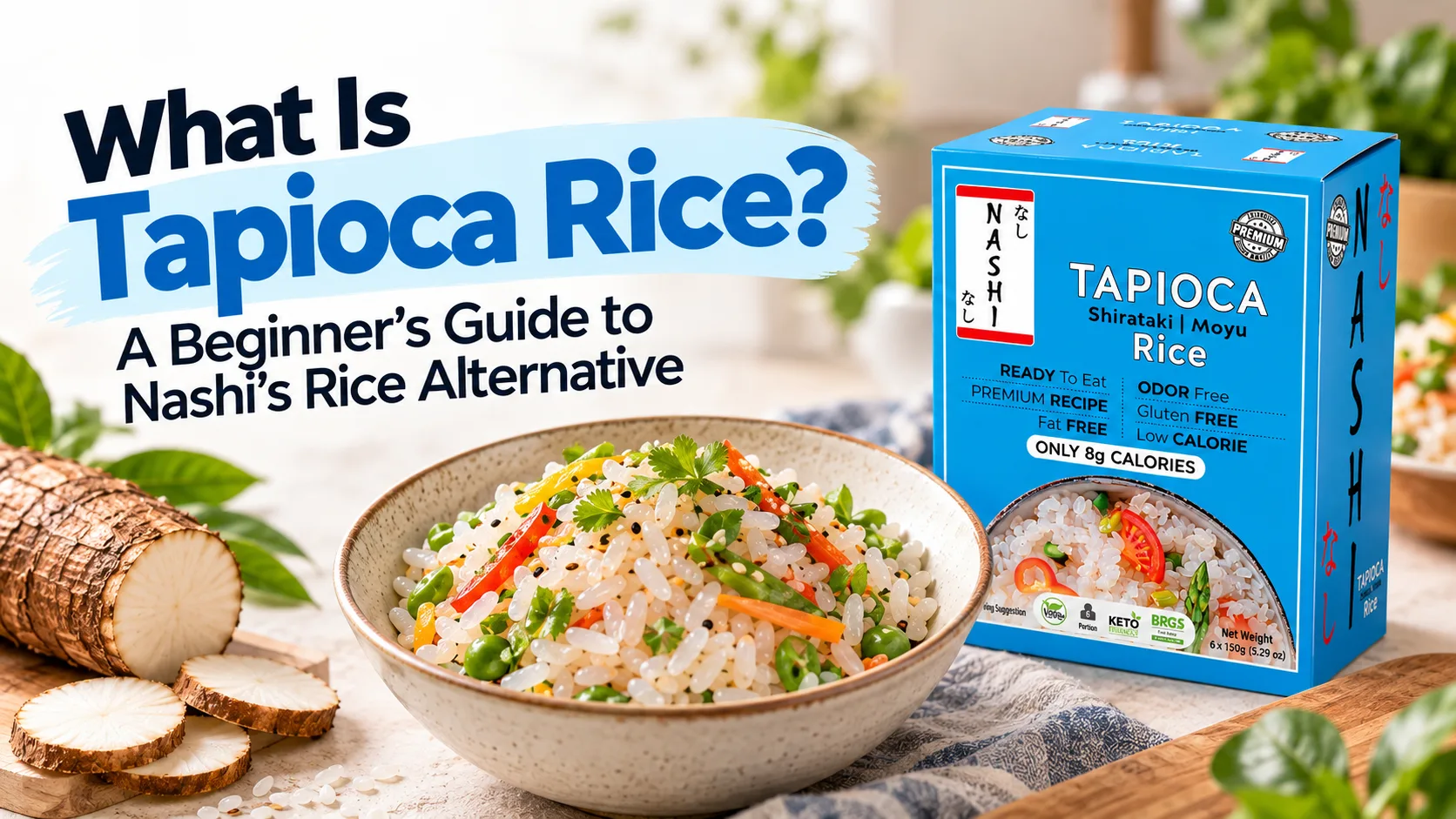
What Is Tapioca Rice?
Tapioca rice is a rice-style alternative made without using traditional rice grains. Although it is designed to resemble rice, it differs from conventional rice in terms of its ingredients, texture, and nutritional profile. Understanding what tapioca rice is made from and how it performs in different meals provides a clearer picture of how it compares with traditional rice.
Nashi Tapioca Rice is formulated with ingredients such as tapioca, konjac flour, oat fibre, carrot powder, and water. Unlike basmati, jasmine, or brown rice, tapioca rice is not a variety of rice and should not be considered nutritionally equivalent to these traditional grains. Instead, it falls within the wider category of rice alternatives, offering a distinct ingredient composition, texture, and eating experience.
What Is Tapioca?
Tapioca is a starch extracted from the tuberous roots of the cassava plant (Manihot esculenta), which originated in northern and north-eastern Brazil and is now grown in West Africa, South-East Asia and elsewhere. To produce it, the roots are washed, ground and squeezed so that a starchy liquid separates out. The starch settles and is dried into a fine powder, which is sold as flour (also called starch), flakes, sticks or pearls.
Tapioca Uses
Tapioca is a staple food for millions of people in tropical countries. In cooking, it thickens soups, sauces and pie fillings, binds foods such as burgers, and gives breads a chewy texture. The pearls feature in puddings, bubble tea and dishes such as sabudana khichdi.
Tapioca Benefits and Cautions
Tapioca flour is naturally gluten-free, plant-based and free of common allergens such as nuts and grains, so it suits people with coeliac disease or restricted diets. However, it is almost pure carbohydrate, with very little protein, fibre, vitamins or minerals, and it has a high glycaemic index.
What Is Konjac?
Konjac (Amorphophallus konjac) is a perennial plant native to China and cultivated across East and South-East Asia. It grows from a starchy underground corm. The raw corm is toxic, so it is traditionally boiled and treated with an alkaline solution such as limewater before eating. When dried, it contains around 40% glucomannan, a soluble fibre that forms a firm gel.
Konjac Uses
Konjac is made into flour, jelly, cakes known as konnyaku, and shirataki noodles. It serves as a vegan substitute for gelatine and seafood. In Western countries it is also found in food additives and dietary supplements. Beyond food, it is used in facial sponges and in traditional Japanese papermaking.
Konjac Benefits and Cautions
Being rich in fibre, konjac may ease constipation, help to lower cholesterol and fasting blood sugar, and support weight management by promoting fullness. Glucomannan can cause bloating, gas or diarrhoea. Supplements may swell in the throat or bowel and cause blockages, so they should be taken with plenty of water. Children and pregnant or breastfeeding people should avoid them, and people with diabetes should monitor their blood sugar.
How Is Tapioca Rice Different from Traditional Rice?
The difference between traditional rice is a cereal grain, while Nashi Tapioca Rice is formulated from tapioca and other ingredients.
Feature | Traditional rice | Nashi Tapioca Rice |
Main ingredient | Rice grain | Tapioca |
Food type | Grain | Rice alternative |
Ingredients | Rice, depending on variety | Water, tapioca, konjac flour, oat fibre and carrot powder |
Culinary | Bowls, curries, stir-fries and other dishes | Rice bowls, curries, stir-fries and similar meals |
Preparation | Varies according to rice variety | Heat in an open pan for 1-2 minutes or in a microwave for 1 minute. Add to your favourite sauce, stir-fry, soup or salad. |
What Does Nashi Tapioca Rice Taste and Feel Like?
A rice alternative does not need to be identical to conventional rice. Nashi Tapioca Rice provides a rice-style base, while its tapioca and konjac ingredient gives it a different character from cooked rice grains. Rather than relying on the rice itself to provide all the flavour, you can think about the complete plate: a fragrant curry, roasted vegetables, a well-seasoned protein or a fresh dressing can give the meal its character.
This is also where texture becomes part of the experience. If you are used to fluffy basmati or sticky sushi rice, you should treat tapioca rice as its own culinary creation rather than expecting an exact replica of a particular rice variety.
How Can You Serve Tapioca Rice with Everyday Meals?
The easiest way to understand a tapioca rice alternative is to use it in meals where rice is already an integral part of the dish.
Pair It with a Fragrant Curry
A rich vegetable, chicken or plant-based curry can provide the sauce and seasoning, while tapioca rice acts as the rice-style base. This works well when the dish already contains plenty of aromatic ingredients such as ginger, garlic, herbs and spices.
Build a Balanced Rice Bowl
A simple bowl can bring tapioca rice, a source of protein, several vegetables and a dressing or sauce. You can use roasted vegetables one evening and a crisp salad-style combination the next. The tapioca rice provides the base while the other ingredients determine the flavour and nutritional profile of the meal.
Add It to a Stir-Fry
Tapioca rice can also accompany a vegetable stir-fry with tofu, chicken, prawns or another preferred protein. For a more rounded dish, combine contrasting textures like crisp vegetables and a savoury sauce. Fresh herbs, spring onions, sesame seeds or chilli can then be added according to the flavour profile you want.
Is Tapioca Rice Right for You?
Tapioca rice can be worth exploring if you are interested in rice alternatives and want to experiment with a different ingredient composition. It can work well if you want to enjoy building meals around curries, stir-fries and bowls, because those dishes already provide plenty of flavour and texture from other ingredients. If you want to try rice alternatives for yourself, Nashi Tapioca Rice is available as a six-pack of 150g portions.
Conclusion
Tapioca rice offers a different way to enjoy familiar rice-based meals without using conventional rice grains. With its tapioca, konjac flour, oat fibre and carrot powder formulation, Nashi Tapioca Rice can be paired with curries, stir-fries and bowls, making it a versatile option for you to explore modern rice alternatives.
FAQs
Does tapioca rice taste like real rice?
Tapioca rice has a neutral, subtle flavour that absorbs the taste of sauces, curries, and seasonings rather than tasting traditional grain rice.
Is Nashi Tapioca Rice gluten-free?
Yes. Tapioca, konjac flour, carrot powder, and water are naturally free from gluten. While oat fibre is used in the blend, it is gluten-free.
What are the advantages of Nashi Tapioca Rice?
Nashi Tapioca Rice offers a healthy rice alternative to traditional rice. It is ready to eat, fat-free and low in calories. It allows you to enjoy satisfying portions of your rice dishes such as curries, stir-fries, and rice bowls.